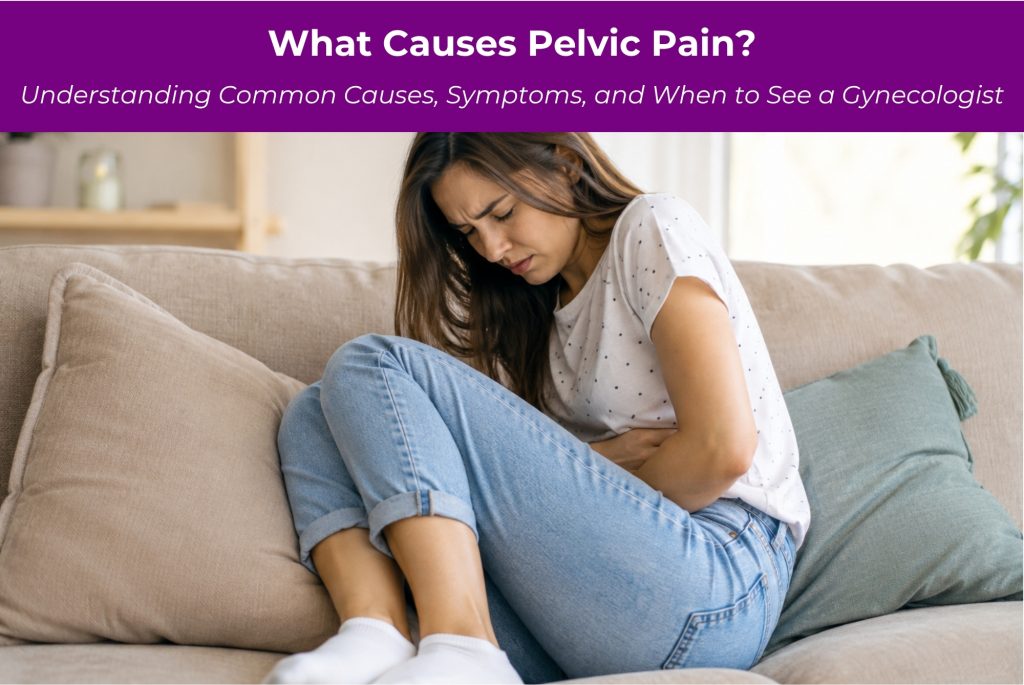
Pelvic pain is discomfort that occurs in the lower abdomen or pelvis, the area below the belly button and between the hips. It can feel like a dull ache, pressure, cramping, heaviness, or sharp pain. For some people, pelvic pain is temporary and related to the menstrual cycle. For others, it may be persistent, recurrent, or a sign of an underlying gynecologic, urinary, gastrointestinal, or musculoskeletal condition.
Because many organs and structures are located within the pelvis, determining the cause of pelvic pain often requires a careful evaluation. At Maureen O. Khoo, MD, FACOG, patients in Los Gatos and Mountain View, California, can receive individualized gynecologic evaluation to better understand their symptoms and appropriate next steps.
What Is Pelvic Pain?
Pelvic pain refers to pain or discomfort felt in the lower abdominal and pelvic region. It may begin suddenly, known as acute pelvic pain, or persist or recur over an extended period.
The location, intensity, timing, and pattern of pain can provide important clues about its cause. Pelvic pain may occur on one or both sides, remain constant, or appear only during certain activities or phases of the menstrual cycle.
Some people experience pelvic pain during menstruation, sexual intercourse, urination, or bowel movements. Others notice symptoms without an obvious trigger.
What Are the Most Common Causes of Pelvic Pain?
Pelvic pain has many possible causes. Some are related to the reproductive system, while others involve the bladder, bowel, muscles, joints, or surrounding tissues.
A medical evaluation can help distinguish among these possibilities rather than relying on symptoms alone.
Menstrual Cramps
Menstrual cramps, also called dysmenorrhea, are a common cause of pelvic pain. During menstruation, the uterus contracts as it sheds its lining. These contractions can cause cramping in the lower abdomen and pelvis.
Mild or moderate cramping may be a normal part of menstruation. However, severe menstrual pain, pain that interferes with normal activities, or menstrual discomfort that becomes progressively worse deserves medical attention because another condition may be contributing to the symptoms.
Ovulation Pain
Some people experience one-sided pelvic discomfort around the time an ovary releases an egg. This is sometimes called mittelschmerz.
Ovulation pain is often temporary and occurs around the middle of the menstrual cycle. However, persistent, unusually severe, or recurring pain should not automatically be attributed to ovulation without appropriate evaluation.
Endometriosis
Endometriosis occurs when tissue similar to the lining of the uterus grows outside the uterus. It can contribute to inflammation, scarring, and pelvic pain.
Symptoms may include painful periods, chronic pelvic pain, pain during or after intercourse, discomfort with bowel movements or urination around menstruation, and fertility difficulties. Symptoms vary considerably, and the severity of pain does not necessarily indicate the extent of the condition.
Uterine Fibroids
Uterine fibroids are noncancerous growths that develop in or around the uterus. Some fibroids cause no symptoms, while others may contribute to pelvic pressure, pain, heavy or prolonged menstrual bleeding, abdominal fullness, frequent urination, or constipation.
The symptoms a person experiences can depend on the number, size, and location of the fibroids.
Ovarian Cysts
An ovarian cyst is a fluid-filled sac that forms on or within an ovary. Many ovarian cysts are benign and resolve without treatment. Some, however, may cause pelvic pressure or pain.
Sudden, severe pelvic pain can sometimes occur if a cyst ruptures or an ovary twists, a condition known as ovarian torsion. Severe or rapidly developing symptoms require prompt medical evaluation.
Pelvic Inflammatory Disease
Pelvic inflammatory disease (PID) is an infection involving the upper female reproductive organs. It can develop when certain infections spread from the vagina or cervix to the uterus, fallopian tubes, or ovaries.
Possible symptoms include lower abdominal or pelvic pain, abnormal vaginal discharge, bleeding between periods, pain during intercourse, fever, or painful urination. Prompt diagnosis and treatment are important because untreated PID can lead to complications, including scarring and fertility problems.
Adenomyosis
Adenomyosis occurs when tissue similar to the uterine lining grows into the muscular wall of the uterus. It may cause painful menstrual periods, heavy bleeding, pelvic pressure, or chronic pelvic discomfort.
Because symptoms can overlap with those of fibroids and endometriosis, a gynecologic evaluation can be useful in determining the likely source of pain.
Pregnancy-Related Causes
Pelvic discomfort can occur during pregnancy for many reasons, some of which are not dangerous. However, pelvic pain can also be associated with conditions that require urgent medical attention, including ectopic pregnancy or pregnancy complications.
Anyone who is or may be pregnant and develops significant pelvic pain—particularly pain accompanied by vaginal bleeding, fainting, dizziness, weakness, or shoulder pain—should seek prompt medical care.
Urinary Tract and Bladder Conditions
Not every case of pelvic pain originates in the reproductive organs. Urinary tract infections and certain bladder disorders can cause discomfort in the lower abdomen or pelvis.
Symptoms such as burning during urination, urinary urgency, frequent urination, blood in the urine, or bladder pressure may indicate that the urinary system is involved.
Gastrointestinal Causes of Pelvic Pain
The bowel occupies part of the pelvic and lower abdominal region, so gastrointestinal conditions may produce symptoms that resemble gynecologic pelvic pain.
Constipation, irritable bowel syndrome, inflammatory conditions, and other digestive disorders can cause abdominal or pelvic discomfort, bloating, or changes in bowel habits.
Keeping track of whether pain is related to eating or bowel movements may provide useful information during a medical evaluation.
Pelvic Floor and Musculoskeletal Pain
Muscles, connective tissues, nerves, joints, and the pelvic floor can also contribute to pelvic pain. Muscle tension, injury, nerve irritation, or pelvic floor dysfunction may produce persistent discomfort.
This type of pain may worsen with sitting, exercise, intercourse, or certain movements. Because pelvic pain can have multiple contributing factors, evaluation may involve considering both gynecologic and musculoskeletal causes.
When Is Pelvic Pain Considered Chronic?
Pelvic pain that persists or repeatedly returns over several months is commonly described as chronic pelvic pain. Chronic pain may have a single identifiable cause, multiple overlapping causes, or no immediately obvious explanation.
Conditions associated with chronic pelvic pain can include endometriosis, adenomyosis, fibroids, bladder disorders, gastrointestinal conditions, pelvic floor dysfunction, and previous pelvic infections or surgery.
A detailed history and examination can help guide further testing and treatment.
How Is the Cause of Pelvic Pain Diagnosed?
Diagnosing pelvic pain usually begins with a discussion of symptoms and medical history. Important information may include when the pain began, where it occurs, whether it is constant or intermittent, how it relates to menstruation, and whether it changes with intercourse, urination, bowel movements, or physical activity.
Depending on the symptoms and clinical findings, evaluation may include a pelvic examination, pregnancy testing, urine or laboratory testing, screening for infections, or imaging such as pelvic ultrasound. Additional testing may be appropriate depending on the suspected cause.
Not every patient needs every test. The evaluation should be guided by the individual’s symptoms, history, examination findings, age, and pregnancy status.
Why Tracking Pelvic Pain Can Help
Keeping a symptom diary can provide useful information for a gynecologic appointment. Consider recording when the pain occurs, how long it lasts, its severity, its relationship to the menstrual cycle, and any associated bleeding, discharge, urinary symptoms, bowel changes, nausea, or pain during intercourse.
These details can help reveal patterns that may otherwise be difficult to recognize.
How Is Pelvic Pain Treated?
Treatment depends on the underlying cause, severity of symptoms, overall health, reproductive goals, and other individual considerations.
Depending on the diagnosis, management may involve medication, hormonal treatment, treatment of an infection, pelvic floor therapy, lifestyle or symptom-management strategies, minimally invasive procedures, or surgery. Some patients benefit from care involving more than one medical specialty when several factors contribute to their pain.
An accurate diagnosis is important because a treatment that is appropriate for one cause of pelvic pain may not be appropriate for another.
When Should You See a Gynecologist for Pelvic Pain?
Consider scheduling a gynecologic evaluation when pelvic pain is persistent, repeatedly returns, becomes more severe, interferes with work or normal activities, occurs during intercourse, or is accompanied by abnormal menstrual bleeding or other new symptoms.
You should also discuss significant changes in menstrual pain with your healthcare provider, particularly when previously manageable periods become increasingly painful.
When Does Pelvic Pain Require Immediate Medical Attention?
Sudden or severe pelvic pain should not be ignored. Seek urgent medical attention for severe or rapidly worsening pain, especially when it occurs with heavy bleeding, fever, fainting, significant dizziness or weakness, persistent vomiting, or possible pregnancy.
These symptoms can sometimes be associated with conditions that require prompt treatment.
Frequently Asked Questions About Pelvic Pain
What is the most common reason for pelvic pain?
There is no single cause that applies to everyone. Menstrual cramping is common, but pelvic pain can also result from endometriosis, fibroids, ovarian cysts, infections, urinary conditions, gastrointestinal problems, or musculoskeletal issues. The pattern and associated symptoms help determine which causes are most likely.
Can pelvic pain be normal?
Mild, temporary pelvic discomfort may occur with menstruation or ovulation. Persistent, severe, worsening, or unexplained pelvic pain should be evaluated rather than assumed to be normal.
Why do I have pelvic pain but no period?
Pelvic pain can occur independently of menstruation. Possible causes include ovulation, ovarian cysts, endometriosis, fibroids, urinary or gastrointestinal conditions, pelvic floor dysfunction, infections, and pregnancy-related conditions.
Can stress cause pelvic pain?
Stress can contribute to muscle tension and may intensify the perception of existing pain. However, new or persistent pelvic pain should not automatically be attributed to stress. An underlying physical condition may still need to be evaluated.
Can endometriosis cause pelvic pain every day?
Endometriosis symptoms differ from person to person. Some individuals primarily experience pain around menstruation, while others have pain at other times or chronic pelvic discomfort. Evaluation is important because similar symptoms can occur with several conditions.
Can an ovarian cyst cause pelvic pain?
Yes. Some ovarian cysts can cause pressure, aching, or one-sided pelvic pain, although many cause no symptoms. Sudden severe pain can occur with certain complications and requires prompt evaluation.
Can fibroids cause pelvic pressure as well as pain?
Yes. Depending on their size and location, fibroids may cause pelvic pressure, heaviness, discomfort, heavy menstrual bleeding, frequent urination, or constipation.
Why does my pelvis hurt during intercourse?
Pain during intercourse can have several possible causes, including endometriosis, pelvic floor muscle dysfunction, infection, ovarian cysts, and other gynecologic conditions. Persistent or recurrent pain during sex is worth discussing with a gynecologist.
Can constipation cause pelvic pain?
Yes. Because the bowel is located within the lower abdominal and pelvic region, constipation can cause pressure, bloating, cramping, and discomfort that may be perceived as pelvic pain.
Can a urinary tract infection cause pelvic pain?
A urinary tract infection may cause lower abdominal or pelvic discomfort along with burning during urination, urinary frequency, or urgency. Urinary symptoms accompanied by fever, back or side pain, vomiting, or worsening illness warrant prompt medical evaluation.
Does pelvic pain always mean something is wrong with the reproductive organs?
No. Pelvic pain can originate from reproductive organs, but it may also involve the urinary tract, digestive system, pelvic floor muscles, nerves, joints, or other structures.
How do doctors determine whether pelvic pain is caused by endometriosis?
Evaluation typically considers the patient’s symptoms, medical history, pelvic examination, and, when appropriate, imaging. Imaging can help identify some conditions associated with pelvic pain, but endometriosis is not always visible on routine imaging. The diagnostic approach depends on the individual clinical situation.
Should I worry about sudden one-sided pelvic pain?
Sudden, significant one-sided pain deserves prompt attention, particularly when severe or accompanied by nausea, vomiting, dizziness, fainting, bleeding, or possible pregnancy. Several conditions can produce this symptom, and some require urgent treatment.
Should I see a gynecologist if my pelvic pain keeps returning?
Yes. Recurrent pelvic pain can be evaluated even if it disappears between episodes. The timing and pattern of repeated symptoms may help your gynecologist identify possible causes and determine whether testing is needed.
What information should I bring to my pelvic pain appointment?
It can be helpful to note when your symptoms began, the location and severity of the pain, how long episodes last, your menstrual cycle dates, abnormal bleeding or discharge, medications, previous pelvic conditions or procedures, and whether the pain changes with intercourse, urination, bowel movements, food, or exercise.
Schedule an Evaluation for Pelvic Pain
Pelvic pain has many potential causes, ranging from temporary menstrual discomfort to conditions that require medical treatment. Because symptoms often overlap, an individualized evaluation is one of the most effective ways to determine what may be causing the pain and what treatment options are appropriate.
If you are experiencing persistent, recurring, or concerning pelvic pain, Maureen O. Khoo, MD, FACOG provides gynecologic care for patients in Los Gatos and Mountain View, California. Schedule an appointment to discuss your symptoms and receive recommendations based on your individual needs.
Contact Information
Maureen O. Khoo, MD, FACOG
📍 Los Gatos Office
320 Dardanelli Lane Ste 20
Los Gatos, CA 95032
📞 Phone: (408) 364-2440
📍 Mountain View Office
2490 Hospital Drive, Ste 300
Melchor Pavilion
Mountain View, CA 94040
📞 Phone: (408) 364-2440
🖥️ Visit our website at khoomd.com or call us to book your appointment today!