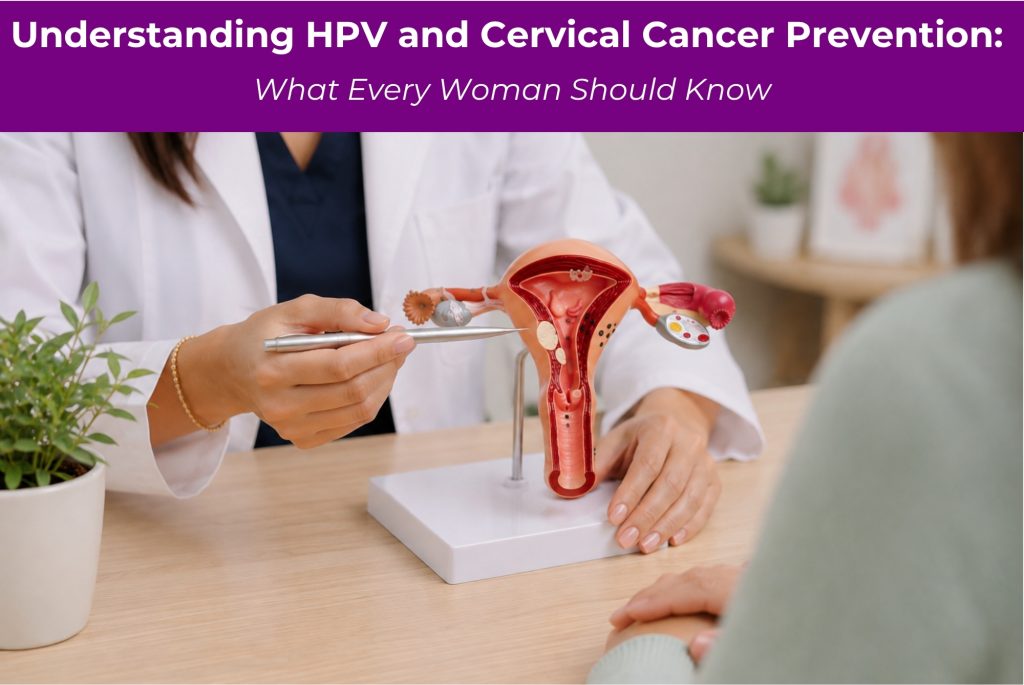
Human papillomavirus (HPV) is extremely common, yet it is also closely connected to one of the most preventable forms of cancer: cervical cancer. Understanding how HPV spreads, how it can affect cervical health, and which preventive measures are available can help women make informed decisions about their long-term well-being.
At Maureen O. Khoo, MD, FACOG, patients in Los Gatos and Mountain View, California, can receive personalized gynecologic care, including cervical cancer screening and guidance on HPV prevention. Routine preventive care plays an important role in identifying cervical changes early, often before they develop into cancer.
What Is HPV?
Human papillomavirus, or HPV, is a group of related viruses that can infect the skin and mucous membranes. HPV is primarily transmitted through intimate skin-to-skin and sexual contact.
There are many types of HPV. Some are considered low-risk and may cause conditions such as genital warts, while certain high-risk HPV types are associated with cancers, including cervical cancer.
HPV infection is very common. In many people, the immune system clears or suppresses the infection without causing symptoms or lasting health problems. The greater concern is a persistent infection with certain high-risk HPV types, which can cause abnormal cellular changes over time.
How Is HPV Connected to Cervical Cancer?
Nearly all cervical cancers are associated with persistent infection with high-risk HPV. However, having HPV does not mean that a person has cervical cancer or will inevitably develop it.
Most HPV infections resolve without progressing to cancer. When a high-risk infection persists, it can cause changes in cervical cells. Some of these changes may become precancerous and, if not detected and appropriately managed, can progress to cervical cancer over a period of years.
This typically slow progression is one reason routine cervical cancer screening is so valuable. Screening can identify abnormal or precancerous cervical changes at a stage when they can often be monitored or treated before invasive cancer develops.
What Are High-Risk HPV Types?
HPV types are generally classified according to their association with cancer. High-risk types can cause cellular changes that may eventually become cancerous.
HPV types 16 and 18 are particularly important because they are responsible for a substantial proportion of cervical cancers worldwide. Other high-risk HPV types can also contribute to cervical cancer and other HPV-associated cancers.
Modern HPV testing can detect high-risk HPV infection and, depending on the test used, may identify certain individual HPV types.
Does HPV Cause Symptoms?
HPV frequently causes no noticeable symptoms. A person may have HPV for years without knowing it.
Likewise, precancerous cervical changes often do not cause symptoms. This makes preventive gynecologic care particularly important because feeling healthy does not necessarily mean that screening is unnecessary.
Symptoms such as abnormal vaginal bleeding, bleeding after intercourse, unusual vaginal discharge, or persistent pelvic pain deserve medical evaluation. These symptoms can have many causes and do not automatically indicate cervical cancer, but they should not be ignored.
How Can Cervical Cancer Be Prevented?
Cervical cancer prevention relies on several complementary strategies. HPV vaccination can reduce the risk of infection with HPV types responsible for many cervical cancers. Routine cervical cancer screening can identify high-risk HPV infections and abnormal cervical cells, while appropriate follow-up can help prevent precancerous changes from progressing.
Preventive care is most effective when vaccination, screening, and follow-up are approached as parts of the same long-term strategy.
HPV Vaccination and Cervical Cancer Prevention
HPV vaccination is an important form of primary prevention because it helps protect against HPV types associated with cervical cancer and other HPV-related diseases.
The vaccine works best when given before exposure to HPV, which is why routine vaccination is recommended beginning during adolescence. However, vaccination may also be appropriate for some adults who were not adequately vaccinated earlier.
Current U.S. recommendations generally call for routine HPV vaccination at ages 11 or 12, although vaccination can begin at age 9. Catch-up vaccination is recommended through age 26 for people who were not adequately vaccinated previously. For some adults ages 27 through 45, vaccination may be considered through shared clinical decision-making with a healthcare professional.
The HPV vaccine prevents new HPV infections; it does not treat an HPV infection that is already present. Even after vaccination, cervical cancer screening remains important according to applicable screening recommendations.
What Is a Pap Test?
A Pap test, also called a Pap smear or cervical cytology test, examines cells collected from the cervix for abnormal changes.
The goal is to identify precancerous changes early, when monitoring or treatment can help prevent progression to cervical cancer. A Pap test does not directly diagnose cervical cancer in most screening situations; instead, an abnormal result may indicate that additional evaluation is appropriate.
What Is an HPV Test?
An HPV test looks for high-risk HPV types associated with cervical cancer.
Depending on a patient’s age, history, and applicable screening guidelines, cervical cancer screening may involve primary HPV testing, a Pap test, or HPV and Pap testing together, sometimes called cotesting.
The appropriate screening strategy and interval can vary based on age, previous test results, medical history, immune status, prior cervical procedures, and other factors.
How Often Should You Be Screened for Cervical Cancer?
There is no single screening schedule appropriate for every patient. Recommendations depend on age, risk factors, screening method, previous results, and medical history.
For average-risk adults with a cervix, screening generally begins in early adulthood and continues at recommended intervals. Different professional organizations may vary somewhat in their recommendations regarding the preferred screening test and starting age.
Some patients require a different screening plan, including those with a history of significant cervical precancer, cervical cancer, certain immune conditions, or other risk factors.
Rather than assuming a particular interval applies to you, discuss your personal screening schedule with your gynecologist.
What Happens If a Pap Test Is Abnormal?
An abnormal Pap test does not necessarily mean that you have cervical cancer.
Abnormal results can occur because cervical cells have changed, often in association with HPV. Depending on the specific result, HPV status, age, and previous screening history, your physician may recommend repeat testing, additional HPV testing, or a closer examination of the cervix through a procedure called colposcopy.
The purpose of follow-up is to determine whether the abnormality is temporary or whether cervical cells require closer monitoring or treatment.
What Is a Colposcopy?
Colposcopy is a procedure used to examine the cervix more closely after certain abnormal cervical screening results.
During the procedure, a healthcare professional uses a magnifying instrument called a colposcope to view the cervix. If an area appears abnormal, a small tissue sample, or biopsy, may be taken for laboratory evaluation.
Being referred for colposcopy does not mean that cervical cancer has been diagnosed. It is an important diagnostic step used to evaluate abnormal findings more carefully.
Can HPV Go Away on Its Own?
Many HPV infections become undetectable as the immune system controls the infection, often without treatment or symptoms.
Persistent high-risk HPV infection is more concerning because it increases the likelihood of developing cervical cell abnormalities. This is why recommended follow-up is important after a positive high-risk HPV test, even when you feel completely well.
Can You Get HPV Even If You Have Had Only One Partner?
Yes. HPV is widespread and can be transmitted through intimate skin-to-skin sexual contact. Having one sexual partner does not completely eliminate the possibility of HPV exposure.
An HPV diagnosis also cannot reliably establish when the infection occurred or from whom it was acquired. HPV can remain undetected for a long time, so a positive result does not necessarily indicate a recent exposure.
Does a Positive HPV Test Mean Cancer?
No. A positive high-risk HPV test means that a type of HPV associated with an increased risk of cervical cell changes has been detected.
Most people who test positive for HPV do not have cervical cancer. The result helps your physician determine whether additional testing, closer surveillance, or another follow-up plan is appropriate.
Can Cervical Cancer Develop After Menopause?
Yes. Cervical cancer can occur after menopause, which is why patients should not stop appropriate screening solely because menstrual periods have ended.
Whether screening can eventually be discontinued depends on factors such as age, prior screening history, previous abnormal results, and individual risk. Your gynecologist can help determine when screening is no longer necessary.
Does a Hysterectomy Mean Cervical Cancer Screening Is No Longer Necessary?
Not always.
The need for continued screening depends on the type of hysterectomy performed, whether the cervix was removed, and whether there is a history of cervical precancer or cancer. Patients who have undergone hysterectomy should discuss their surgical and screening history with their healthcare professional rather than assuming screening is no longer required.
What Other Factors Can Affect Cervical Cancer Risk?
Persistent high-risk HPV infection is the central cause of cervical cancer, but additional factors can influence whether an infection persists or progresses.
Smoking is associated with an increased risk of cervical precancer and cancer. A weakened immune system can also make it more difficult for the body to control HPV infection. Staying current with recommended screenings and follow-up is particularly important for patients with additional risk factors.
Can Condoms Prevent HPV?
Condom use can reduce the risk of HPV transmission, but it cannot provide complete protection because HPV may infect areas of skin that are not covered by a condom.
Safer sexual practices, HPV vaccination, and appropriate cervical cancer screening can work together as part of a broader prevention strategy.
Why Routine Gynecologic Care Matters
Cervical cancer prevention is a long-term process rather than a single test or appointment. HPV vaccination can help prevent many high-risk infections, screening can identify infections and abnormal cells, and timely follow-up can address concerning changes before they become more serious.
Regular gynecologic care also provides an opportunity to discuss changes in your health, previous screening results, contraception, menstrual concerns, menopause, sexual health, and other aspects of reproductive and gynecologic well-being.
At Maureen O. Khoo, MD, FACOG, cervical health recommendations can be individualized according to each patient’s age, medical history, previous test results, and personal risk factors.
Frequently Asked Questions About HPV and Cervical Cancer Prevention
Is HPV common?
Yes. HPV is one of the most common sexually transmitted infections. Many sexually active people are exposed to HPV at some point, often without ever experiencing symptoms.
Can I have HPV without knowing it?
Yes. HPV frequently causes no symptoms, and an infection may be present without a person knowing it. Screening is therefore important even when you feel healthy.
If I have HPV, will I get cervical cancer?
No. Most HPV infections do not lead to cervical cancer. Persistent infection with certain high-risk HPV types can increase the risk of precancerous cervical changes, making appropriate screening and follow-up important.
Can an HPV infection be treated?
There is no medication that directly eliminates HPV itself. However, healthcare professionals can monitor or treat health problems caused by HPV, including precancerous cervical changes.
Do I still need cervical cancer screening if I received the HPV vaccine?
Yes. HPV vaccination substantially improves protection but does not eliminate the need for recommended cervical cancer screening.
Can I get HPV after being vaccinated?
It is possible. Vaccination protects against important HPV types but does not prevent every HPV type. It also does not eliminate infections acquired before vaccination.
What does a positive HPV test mean?
A positive test means that high-risk HPV has been detected. It does not mean that you have cervical cancer. Your healthcare professional will use the specific result and your screening history to determine appropriate follow-up.
Should I worry about an abnormal Pap smear?
An abnormal Pap result should be followed appropriately, but it does not automatically mean cancer. Many abnormalities are mild or temporary. Your physician may recommend repeat screening, HPV testing, colposcopy, or another evaluation depending on the result.
Can cervical precancer be treated?
Yes. When significant precancerous cervical changes are identified, several treatments may be available to remove or destroy abnormal tissue and reduce the risk of progression to invasive cervical cancer. Treatment depends on the type and severity of the abnormality and individual clinical circumstances.
At what age should I stop cervical cancer screening?
The appropriate age to discontinue screening depends on your screening history and risk factors. Some average-risk patients with adequate prior negative screening may stop later in life, while others need continued surveillance. A physician should review your individual history before screening is discontinued.
Should I have a Pap test every year?
Not necessarily. Many average-risk patients do not require annual cervical cancer screening. The appropriate interval depends on age, the type of screening performed, previous results, and individual risk factors. An annual gynecologic visit may still be appropriate even when cervical screening is not due.
Can HPV affect areas other than the cervix?
Yes. HPV can affect other areas of the body and is associated with several other cancers, including certain anal, vaginal, vulvar, penile, and oropharyngeal cancers.
When should I make an appointment with a gynecologist?
Consider scheduling an appointment when cervical cancer screening is due, when you have questions about HPV vaccination or a previous HPV or Pap result, or when you experience symptoms such as unusual bleeding, bleeding after intercourse, persistent pelvic discomfort, or unusual discharge.
Take a Proactive Approach to Cervical Health
Cervical cancer is unusual among cancers because healthcare professionals have powerful tools for prevention and early detection. HPV vaccination can prevent many infections associated with cervical cancer, while cervical screening can identify high-risk infections and precancerous changes before invasive cancer develops.
The most appropriate prevention strategy depends on your age, health history, vaccination status, previous cervical screening results, and individual risk factors. If you are unsure whether you are due for a Pap test, HPV test, or another form of follow-up, a gynecologic consultation can help clarify your next steps.
Schedule an appointment with Maureen O. Khoo, MD, FACOG to discuss HPV, cervical cancer screening, and a prevention plan tailored to your individual needs.
Contact Information
Maureen O. Khoo, MD, FACOG
📍 Los Gatos Office
320 Dardanelli Lane Ste 20
Los Gatos, CA 95032
📞 Phone: (408) 364-2440
📍 Mountain View Office
2490 Hospital Drive, Ste 300
Melchor Pavilion
Mountain View, CA 94040
📞 Phone: (408) 364-2440
🖥️ Visit our website at khoomd.com or call us to book your appointment today!